Source Self Priming Centrifugal Sewage Pump for Water Treatment, Irrigation, and Industry
Explore 30 listings for the self priming centrifugal sewage pump designed for clarified water, slurry, and chemical applications. Buyers can compare specifications including flow rates, head heights, and material options to find suitable units for diverse industrial needs.
Key considerations
Products List




Comprehensive Sourcing Guide
Strategic Sourcing Guide for Self-Priming Centrifugal Sewage Pumps
Understanding Technical Specifications and Core Mechanics
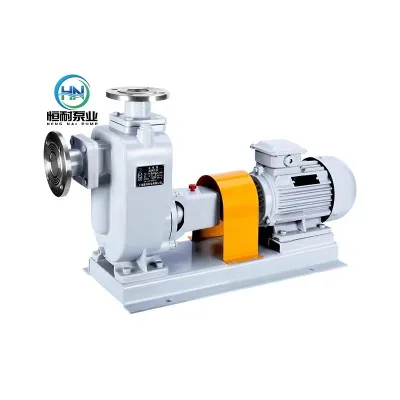
When sourcing a self-priming centrifugal sewage pump, the buyer must first distinguish between the fundamental operating principles and the specific mechanical configurations available in the current market. The core technology relies on a centrifugal action where the impeller rotates to create a vacuum, allowing the pump to evacuate air from the suction line and draw in liquid without external priming aids. In the observed product landscape, the theoretical basis is consistently identified as the centrifugal pump, with specific variants utilizing jet-flow theories or inner recirculation mechanisms to enhance self-priming capabilities.
A critical observation in the current inventory is the variation in impeller design. Buyers will encounter pumps featuring semi-open impellers, which are particularly suited for handling sewage and slurry due to their ability to pass larger solids without clogging. The maximum solid size that these units can typically handle is observed to be up to 50mm, a specification that is vital for sewage applications where debris is common. The influent type is predominantly single-suction, meaning the fluid enters the impeller from one side, which influences the hydraulic balance and maintenance requirements.
The physical arrangement of the pump is another decisive factor. The majority of units in this category are configured as horizontal pumps with a horizontal split casing design. This construction allows for easier access to internal components for inspection and repair without dismantling the entire piping system. The mounting height is generally associated with suction centrifugal configurations, ensuring that the pump can effectively lift fluid from below the pump centerline. The shaft position is horizontal, which is standard for most industrial and municipal sewage applications, providing stability and reducing vibration during high-speed operation.
Performance metrics vary significantly across different models. The flow rate for these pumps spans a broad range, observed from 30 to 6200 cubic meters per hour, indicating that the market offers solutions for both small-scale domestic needs and large industrial processing plants. The head, or the height to which the pump can lift the fluid, ranges from 5 to 125 meters, with some high-pressure variants exceeding 150 meters. This wide range suggests that buyers must carefully match the system curve of their specific application to the pump's performance curve. The operating speed is typically available in two standard configurations: 2900 rpm and 1450 rpm, allowing for trade-offs between flow velocity and mechanical wear.
Compliance, Certification, and Material Standards
Verifying compliance and material integrity is paramount when selecting equipment for sewage treatment, where corrosion resistance and durability are non-negotiable. The sourcing process must prioritize suppliers who can demonstrate adherence to international quality and safety standards. In the observed market, specific certifications such as CE, SGS, and ISO9001 are frequently cited as part of the product standard documentation. These certifications indicate that the manufacturing process meets defined quality management systems and that the products have undergone safety testing relevant to the European and global markets.
Material selection is the second pillar of compliance and longevity. The pump casing and internal components are constructed from a variety of materials depending on the corrosiveness of the sewage and the required lifespan. The observed material palette includes cast iron, cast steel, and stainless steel. Cast iron is a common choice for general sewage applications due to its cost-effectiveness and adequate strength, while cast steel offers higher tensile strength for high-pressure scenarios. Stainless steel is essential for applications involving highly corrosive chemicals or potable water treatment, ensuring that the pump does not contaminate the media. The specific application dictates the material; for instance, chemical pumps and clarified water pumps may require stainless steel, whereas standard sewage pumps often utilize cast iron.
The sealing mechanism is another critical compliance area. The pump must maintain a tight seal to prevent leakage of hazardous sewage into the environment. The available sealing technologies include mechanical seals, packing seals, and dynamic seals. Mechanical seals are generally preferred for their reliability and lower maintenance requirements in continuous operation, while packing seals may be used in specific high-temperature or abrasive conditions. The choice of seal material and design must be verified against the specific chemical composition of the sewage being pumped to prevent premature failure.
Furthermore, the electrical and motor components must align with local grid standards and safety regulations. The transmission type is observed to be direct connection, which simplifies the drive system but requires precise alignment to prevent vibration. The motor type is typically fitted as an air engine or electric motor, and the power range observed spans from 1.5kW to 22kW. Buyers must ensure that the motor specifications match the local voltage and frequency requirements. The product origin is noted as China, with specific manufacturing hubs in Shanghai, which may influence the logistics and regulatory compliance checks required for import into different regions.
Cost Drivers and Pricing Structures
The pricing of self-priming centrifugal sewage pumps is influenced by a complex interplay of technical specifications, material costs, and customization requirements. The observed price range in the market is extensive, spanning from 1 USD to 100,000 USD. This vast disparity is not indicative of quality differences alone but reflects the scale of the equipment, from small domestic units to large industrial booster systems. The primary cost driver is the flow rate and head capacity; pumps capable of moving 6200 cubic meters per hour against a high head will naturally command a higher price than those designed for 30 cubic meters per hour.
Material composition is a significant factor in cost determination. A pump constructed entirely of stainless steel will be more expensive than one made of cast iron due to the raw material costs and the more complex machining required. Similarly, the inclusion of advanced sealing technologies like high-grade mechanical seals adds to the overall cost compared to traditional packing seals. The complexity of the self-priming mechanism also plays a role; pumps with integrated vacuum assist systems or complex inner recirculation designs may carry a premium over simpler centrifugal models.
Customization is another major cost variable. The market indicates that customization is available, with options for OEM (Original Equipment Manufacturer) and ODM (Original Design Manufacturer) support. Buyers requesting specific modifications to the pump model, such as unique mounting dimensions, specialized motor types, or custom material grades, will incur additional costs. The minimum order quantity (MOQ) is observed to be as low as 1 set, which allows for single-unit procurement but may result in a higher unit price compared to bulk orders. However, for large-scale projects, negotiating volume discounts can significantly reduce the per-unit cost.
Packaging and logistics also contribute to the final landed cost. The observed packing methods include plywood boxes and export polywood cases, which are designed to protect the pump during international shipping. The choice of packaging material and the complexity of the crate can affect shipping costs, especially for heavy industrial units. Additionally, the origin of the product, specifically from Shanghai, China, influences freight costs based on the destination port and current shipping rates. Buyers should factor in these logistics costs when comparing the total cost of ownership against the initial purchase price.
Typical Applications and Operational Environments
Self-priming centrifugal sewage pumps are versatile assets deployed across a wide spectrum of industries and environments. The observed applications range from domestic water solutions to large-scale industrial utilities. In the residential sector, these pumps are utilized in family homes for drainage and sewage transfer, often requiring compact units with automatic self-priming capabilities to handle intermittent flow. Commercial buildings also rely on these pumps for their internal sewage systems, where reliability and low maintenance are critical to avoid disruptions.
The industrial sector presents more demanding applications. The pumps are extensively used in the automotive industry for coolant and waste water management, and in the food and beverage industry for handling organic waste and cleaning processes. In the chemical industry, the pumps must handle corrosive liquids, necessitating the use of stainless steel or specialized coatings. The biofuel industry and industrial boilers also utilize these pumps for slurry and chemical transfer, where the ability to handle high-pressure and high-temperature fluids is essential.
Water treatment and infrastructure projects are another key area of application. District energy systems and drinking water treatment plants use these pumps for circulating water and managing sewage effluent. The pumps are also critical in developing world water solutions, where robust and low-maintenance equipment is required to ensure reliable access to clean water and sanitation. Irrigation systems benefit from the high flow rates and self-priming capabilities, allowing for efficient water distribution over large areas.
The specific type of pump selected often depends on the nature of the media being pumped. Sewage pumps are designed to handle raw sewage with solids, while slurry pumps are optimized for abrasive mixtures. Clarified water pumps are used in the final stages of treatment where the water is relatively clean but requires high pressure for distribution. Chemical pumps are tailored for specific chemical compounds, requiring resistance to corrosion and chemical attack. The versatility of the self-priming centrifugal design allows it to adapt to these diverse environments, making it a preferred choice for multi-purpose facilities.
Supplier Evaluation and Quality Control Protocols
Evaluating suppliers for self-priming centrifugal sewage pumps requires a rigorous assessment of their technical capabilities, manufacturing processes, and quality control systems. Buyers should prioritize suppliers who can provide comprehensive documentation, including material certificates, performance test reports, and compliance certificates such as CE, SGS, and ISO9001. The presence of these certifications is a strong indicator of a supplier's commitment to quality and adherence to international standards.
The manufacturing location is another important factor. Suppliers based in established industrial hubs like Shanghai, China, often have access to advanced manufacturing facilities and a skilled workforce. However, buyers should verify the specific factory capabilities and audit the production lines to ensure that the quality control measures are consistent. The supplier's ability to offer customization, including OEM and ODM services, is also a key differentiator. Suppliers with flexible production lines can tailor the pump design to meet specific project requirements, providing a competitive advantage in complex applications.
Quality control protocols should be a central part of the supplier evaluation. Buyers should inquire about the testing procedures used for the pumps, including hydrostatic testing, vibration analysis, and performance curve verification. The supplier should be able to demonstrate that each pump undergoes rigorous testing before shipment to ensure it meets the specified flow rate, head, and efficiency requirements. The use of high-quality materials, such as cast steel and stainless steel, should be verified through material traceability records.
The supplier's after-sales support and warranty terms are also critical. A reliable supplier will offer comprehensive technical support, spare parts availability, and a clear warranty policy. The ability to provide training for the installation and maintenance of the pumps is an added value that can reduce downtime and operational costs. Buyers should also consider the supplier's reputation in the market, seeking references from previous clients in similar industries to gauge their reliability and performance.
Long-Term Procurement and Lifecycle Management
Long-term procurement of self-priming centrifugal sewage pumps involves more than just the initial purchase; it requires a strategic approach to lifecycle management and total cost of ownership. The operational lifespan of these pumps is influenced by the quality of the materials, the severity of the operating conditions, and the maintenance practices employed. Buyers should plan for regular maintenance schedules, including the inspection and replacement of seals, bearings, and impellers, to prevent unexpected failures and extend the pump's service life.
The availability of spare parts is a crucial consideration for long-term procurement. Suppliers should maintain a robust inventory of spare parts to ensure quick replacement in case of wear or damage. The standardization of components, such as the mechanical seals and motor types, can simplify the maintenance process and reduce the cost of spare parts. Buyers should also consider the energy efficiency of the pumps, as high-efficiency models can significantly reduce operating costs over the lifespan of the equipment.
Environmental regulations and sustainability goals are increasingly influencing procurement decisions. Buyers should evaluate the environmental impact of the pumps, including their energy consumption and the potential for leakage. Pumps with advanced sealing technologies and high-efficiency motors can help reduce the carbon footprint of the facility. Additionally, the disposal and recycling of the pumps at the end of their life cycle should be considered, with a preference for suppliers who offer take-back programs or use recyclable materials.
Finally, the scalability of the procurement strategy is important. As the facility expands or the demand for sewage treatment increases, the pump system should be capable of scaling up or down to meet the changing requirements. Modular designs and flexible configurations allow for easy upgrades and expansions without the need for complete system replacements. By adopting a long-term perspective, buyers can ensure that their investment in self-priming centrifugal sewage pumps delivers value and reliability over the years.
FAQs
What is the maximum solid size the pump can handle?
The pump can handle solids up to 50mm in diameter. This capacity is critical for sewage applications where debris is common, ensuring the semi-open impeller prevents clogging during operation.
Which materials are used for the pump casing and components?
The pump is constructed from cast iron, cast steel, or stainless steel. Material selection depends on the specific application, with stainless steel required for corrosive chemicals and cast iron for general sewage.
How fast does the pump operate during normal usage?
The operating speed is typically available at 2900 rpm or 1450 rpm. These speeds allow buyers to trade off between flow velocity and mechanical wear based on their specific system requirements.
Can the pump be customized for specific industrial needs?
Yes, customization is available with OEM and ODM support options. Buyers can request specific modifications to the model, mounting dimensions, or motor types to fit unique operational environments.
What certifications do the manufacturers typically hold?
Manufacturers frequently hold CE, SGS, and ISO9001 certifications. These standards indicate adherence to international quality management systems and safety testing relevant for global export markets.
What is the minimum order quantity for purchasing?
The minimum order quantity is one set. This allows for single-unit procurement, though bulk orders may offer better per-unit pricing for large-scale industrial projects.